Ask anyone who's implemented clinical software in a hospital how long it takes, and you'll hear some version of the same number: a year, often more. We brought one health system live in about ten weeks. Here's how, and why it's harder than it sounds.
Most of the time in a food service onboarding doesn't go where people expect. It's not the training or the go-live week. It's the data. A hospital's menus, recipes, ingredients, allergens, and diet rules all have to be loaded, mapped, and checked before the system can safely take a single order. Done by hand, that's an admin reconciling it item by item, which is exactly how a migration stretches toward a year.
And it's rarely as clean as copying over a tidy list. When we get into it, we usually find recipes that have drifted out of date as inventory changed, and allergen and diet details scattered across spreadsheets and the memory of whoever's been there longest. None of that is a knock on the team. They're keeping patients safe on tools that were never built to make it easy. But it's a big part of why getting this data right matters so much, because every one of those details is something a patient is trusting the tray to get correct.
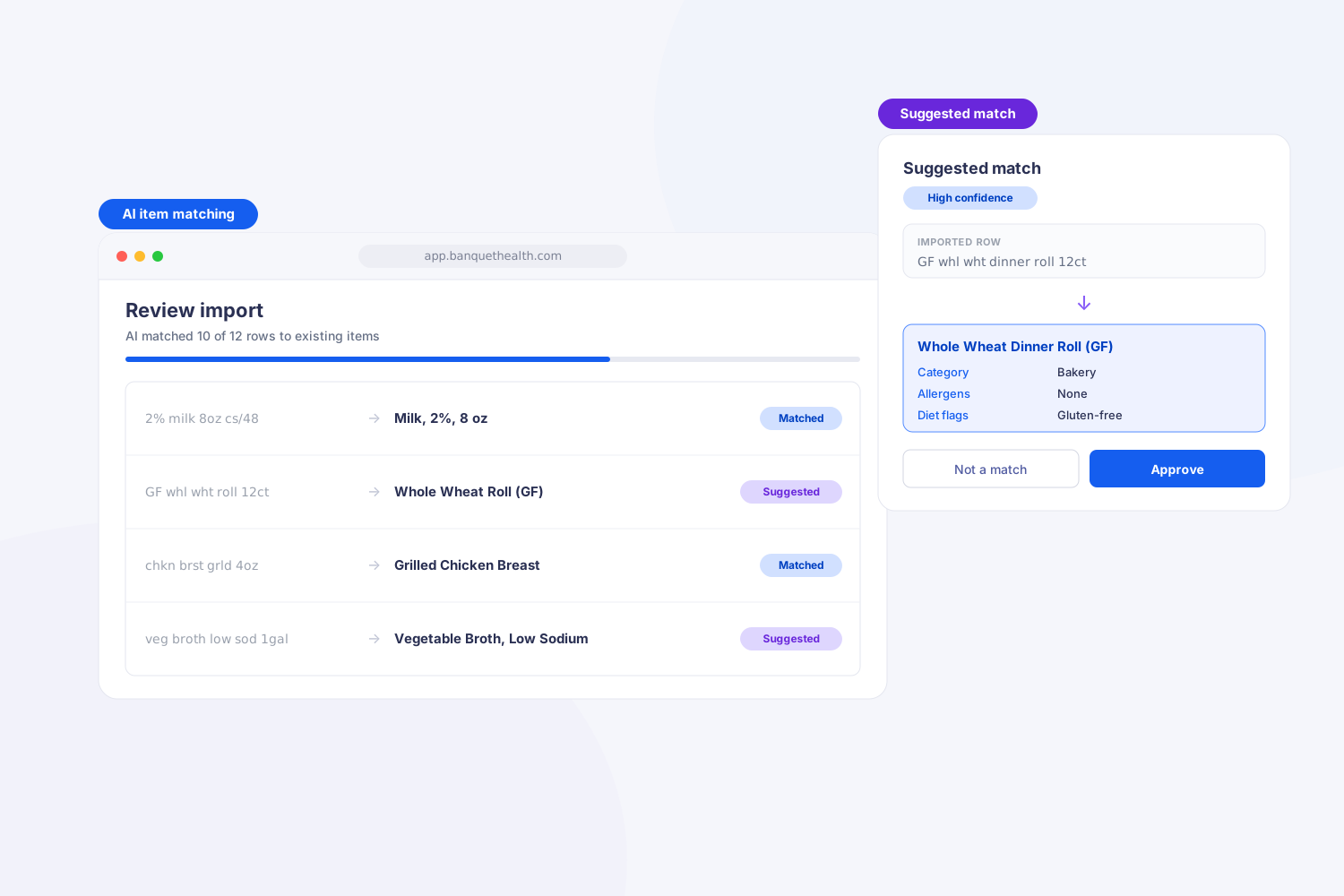
So that's the part we went after first. We built AI-assisted data import to take on the heavy lifting of that first pass: the AI matches messy, inconsistently named items to the right entries, so a person is reviewing and correcting a draft instead of building it from a blank page. A human still reviews the result, and the AI never gets the final say on anything that touches patient safety. The slow manual pass that used to eat weeks now happens in a fraction of the time.
To be clear, AI didn't do this alone: getting our process and playbook right is what first pulled a year-plus down to four to six months, and the AI-assisted import is what took this onboarding to about ten weeks. That's not a number we're treating as the finish line, it's one we're trying to keep driving down, even if every hospital's timeline will look a little different.
There's also a structural reason this is even possible for us, and it's the same reason a lot of what we build ships faster than people expect. Banquet is one integrated platform, not a stack of separate modules bolted together. The menu data, the diet rules, the ordering workflow, and the EMR sync all live in the same system. When the data layer is unified, you can automate against it. When it's fragmented across modules that were never designed to talk to each other, you can't, no matter how good your AI is.
The reason this matters beyond bragging rights is simple. Every month a hospital spends in implementation is a month its team is still living with the old way: the hold times, the manual workarounds, the safety gaps, and the payroll those workarounds quietly eat. Cutting a year down to weeks isn't a vanity metric. It's months of better, safer service, at a lower cost to run, that a hospital gets to start sooner.
We're not done. But the direction is clear, and it's the opposite of how the industry has trained everyone to expect software to work.