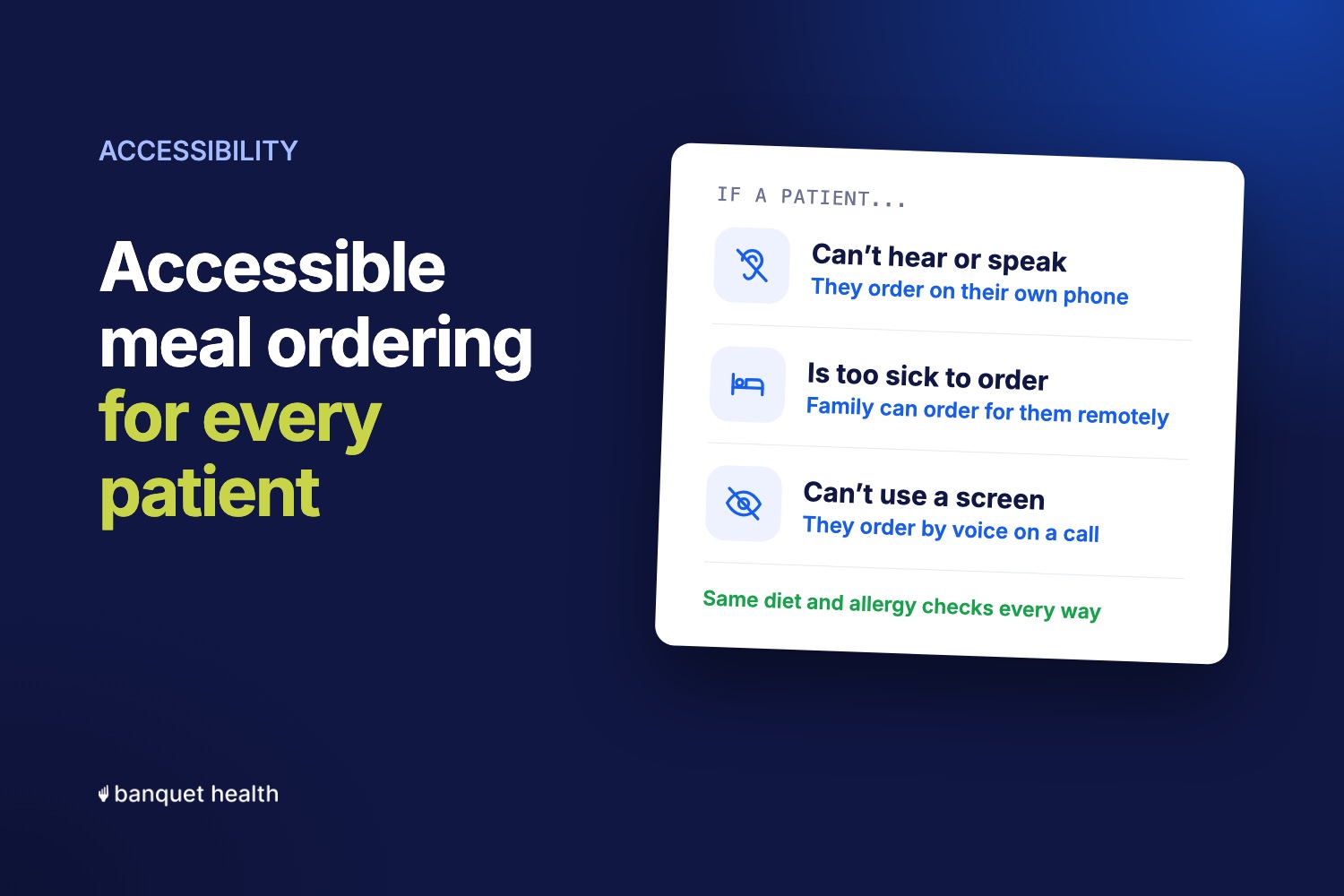
Most hospitals take meal orders one way, so patients who can’t hear the phone, read the menu or speak end up with someone else choosing for them. That’s a big group: about two in five adults over 65 live with a disability, according to the CDC. Older adults are also the people most likely to be in a hospital bed on any given day. The usual options are a phone call to the diet office or a host reading a paper menu at the bedside.
One of our engineers, Jeff, pointed out that without quite realizing it, we’d been building Banquet to fix exactly that. We built each of these features to solve a different problem. Looked at together, they’re an accessibility story.
How can a patient who is deaf or can’t speak order meals?
On their own phone. A patient who is deaf or unable to speak can order their own meals from their phone, without someone translating or taking the order for them. The menu they see already reflects their diet order and allergies, so what they can pick is what they’re allowed to eat.
Can family order meals for a hospital patient?
Yes. If a patient is too sick or sedated to order, their family can do it for them, even from across the country. Nobody knows better that someone hates peas but always wants tea in the morning. The same diet rules apply to a family member’s order as to the patient’s own.
What about patients who can’t use a screen?
They can order by voice. Our AI phone agent takes the order over the phone. It checks every order against the patient’s diet order and allergies, the same as every other channel, and a person on the diet office team is one sentence away at any point in the call.
Why does meal choice matter so much?
So much of a hospital stay is decided for you: when you wake up, when you’re seen, what tests you get. What you eat is one of the few things you still get a say in.
It’s a small thing, until you don’t have that choice.
If you’re looking at how your hospital takes meal orders, one useful question is: for each patient who can’t use the phone, who is choosing their meals today, and do they know what that patient actually likes?