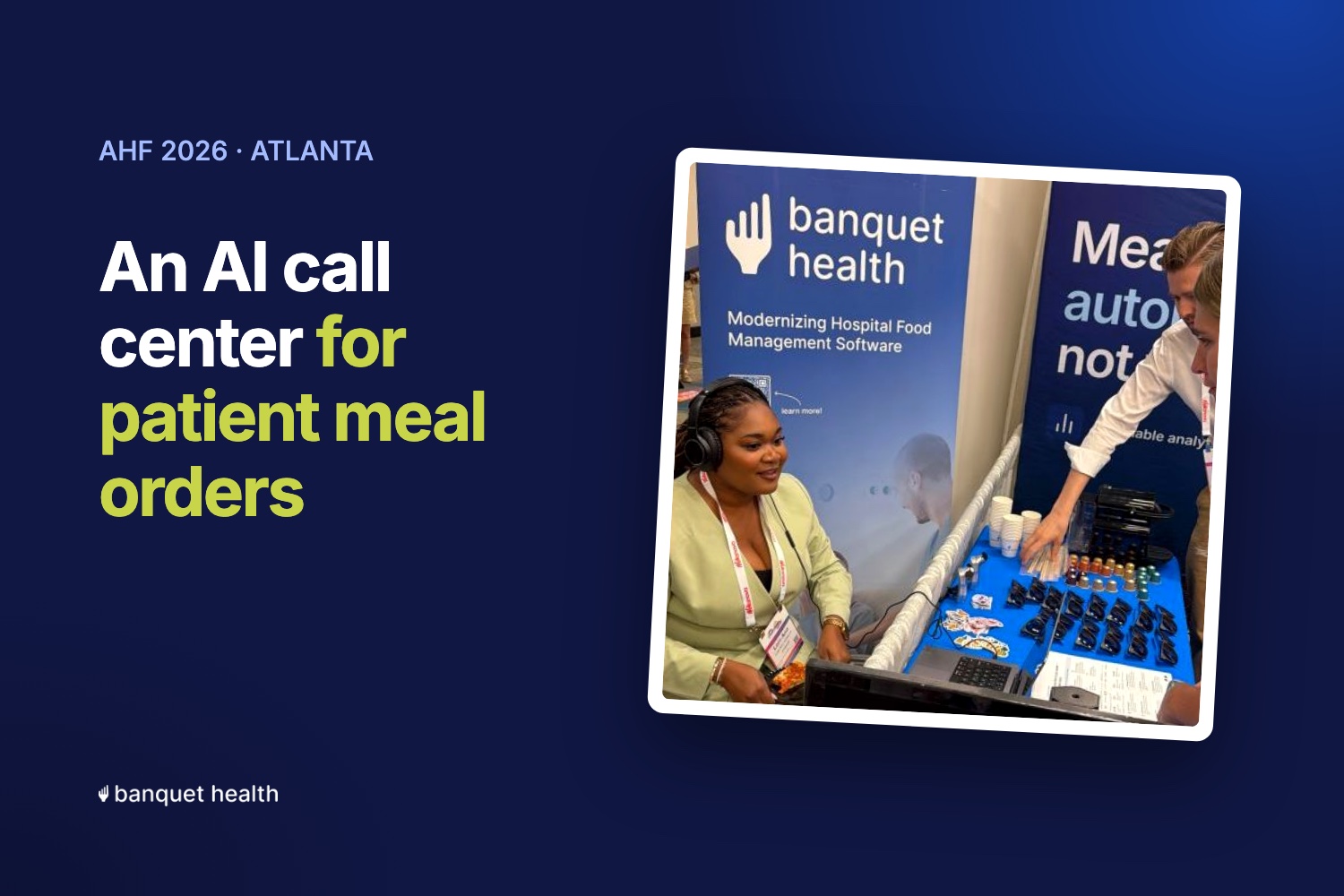
Banquet’s AI call center answers patient meal calls, takes the order, and checks it against the patient’s diet order and allergies before it’s placed. It’s the first agentic call center built for hospital meal ordering, and we showed it publicly for the first time at the Association for Healthcare Foodservice national conference in Atlanta in August 2026.
Here’s why we built it.
What does a meal call look like today?
In most hospitals, a patient who wants to order a meal calls the diet office. A staff member picks up, looks the patient up, reads the menu options, clicks through the same screens they clicked on the last call, checks the diet order, and places the order. Then the next call comes in, and they do it again.
At mealtimes the calls stack up. Patients wait on hold for something as simple as breakfast, and the people answering are stuck at a desk repeating the same steps instead of being on the floor.
Almost all of those calls are routine. The patient is on a regular or well-defined diet, the rules for what they can eat were set long ago, and the call is just someone applying those rules by hand.
What does the AI handle?
All the rote work. The agent answers every call, day or night, so nobody waits on hold to order a meal. It walks the patient through what they can have, takes the order, and checks it against the same diet rules and allergy data as every other way of ordering in Banquet. An order that breaks a rule doesn’t go through.
Your team has already decided how these calls should go: which diets allow what, which substitutions are fine, when to escalate. The agent follows those decisions every time, on every call, without getting tired at the end of a double shift.
What does your team do with the time back?
They spend it in person with the highest-risk patients. Someone newly on a dysphagia diet, a patient with multiple allergies, someone who’s confused or upset, a family with questions about a complicated diet: those deserve a staff member in the room, not a rushed phone call between twenty others.
And on any call, a real person is one sentence away. If a patient asks for a human, or the call goes somewhere the agent shouldn’t handle, it hands off.
Why it’s safe to put AI on the phone
The agent is only as good as the rules and data under it. It runs on the same ingredient, allergy and diet-order data as the rest of Banquet, and nothing it says about an allergy reaches a tray without clearing those rules. We wrote about that layer in why the boring data work is what makes the flashy AI safe.
It’s also one of the ways patients who can’t use a screen can still order for themselves.
If your diet office phones ring nonstop at mealtimes, we’d love to show you how this would work on your floors. Get in touch.